27 October 2026

‘Making the Invisible, Visible’ on a European stage
This October, Acquired Brain Injury Ireland will share the outcomes of a year long creative arts and advocacy project at the 36th Alzheimer Europe Conference.

An Acquired Brain Injury Ireland project exploring ways to elevate the voices of people with traumatic brain injury (TBI) by using creative arts media will be presented by our Director of Research and Policy, Gráinne McGettrick, at the 36th Alzheimer Europe Conference in Dublin this week.  

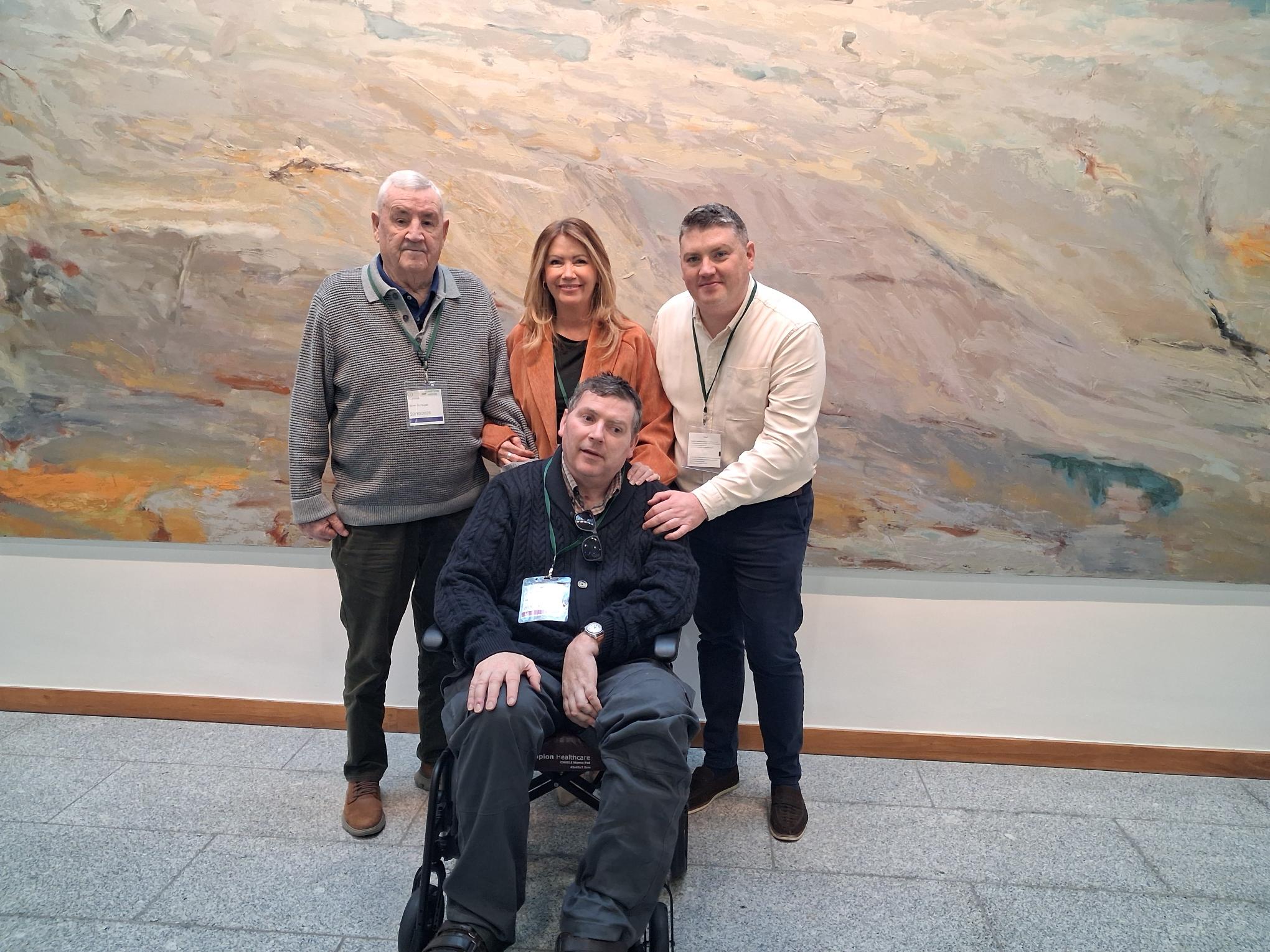
Funded by the Alzheimer’s Association (US), the Alzheimer Society (UK) and the Global Brain Health Institute, ‘Making the Invisible, Visible’ brought together a group of 12 brain injury survivors from our services in Wexford, who spent a year using creative art forms to tell their stories and share their experiences.

A video documenting the creative process has been launched to mark the presentation.

After a life-changing brain injury, many survivors describe feeling invisible and unheard. This project sought to reverse that experience, creating opportunities for the participants to express themselves in creative ways and building a community in which they would feel seen, understood, and connected.

Focusing on the theme of the five senses, the 12 survivors used clay, mosaics, music and olfactory art to craft artworks that reflected their lived experiences. 

The work culminated in a stunning exhibition which was launched by the President of Ireland, Catherine Connolly, at the Green Acres Gallery, Wexford, on 19 March 2026.

The Alzheimer Europe Conference offers a significant platform to share the learning, insights and opportunities that have emerged from the project with brain health leaders around the world. The Conference is expected to bring together some 1,300 delegates including people living with dementia, family carers, researchers, health and social care professionals, policymakers and advocates from across the continent.


Untitled design (9)
“”

The exhibition elevates your voices as survivors in a deeply authentic way. It draws attention to the challenges faced by you as individuals, by your families, your friends and your loved ones after a traumatic life-changing event. But it does a lot more than that. I see your exhibition here as both a cause for reflection and a call to action.

— President of Ireland, Catherine Connolly

Building on the work of the ‘Making the Invisible, Visible’ participants and project team, an advocacy toolkit will next be developed based on the creative works. The toolkit will provide a lasting legacy for the project, helping to raise political and public awareness of acquired brain injury, increase understanding of the realities of living with a brain injury, and advocate for the supports and services that survivors need to live full and meaningful lives.

Subscribe for our latest updates

Join our mailing list to be among the first to hear about news and developments in our services, upcoming events, supports and resources for brain injury survivors and their families.

back-to-top